

Have you ever stayed somewhere that seemed to have everything you needed in one place, from the pool and restaurants to the entertainment and the beach? Chances are you were in one of the many purpose-built resorts found around the world. In this article, the meaning of a purpose-built resort is explained, along with their key features, types, famous examples and their positive and negative impacts.
This is an important topic for Cambridge IGCSE and A Level Travel and Tourism, and it helps to explain how many of today’s most popular holiday destinations came to exist. Ready to learn more? Read on…
- What are purpose-built resorts?
- Purpose-built resorts vs traditional resorts
- Key features of a purpose-built resort
- Types of purpose-built resorts
- 7 brilliant examples of purpose-built resorts
- Purpose-built resorts in the UK
- Why are purpose-built resorts developed?
- The positive impacts of purpose-built resorts
- The negative impacts of purpose-built resorts
- Case study: Cancun, Mexico
- The future of purpose-built resorts
- Why purpose-built resorts matter for your exams
- Purpose-built resorts: to conclude
- Purpose-built resorts: FAQs
- Purpose-built resorts: further reading
What are purpose-built resorts?
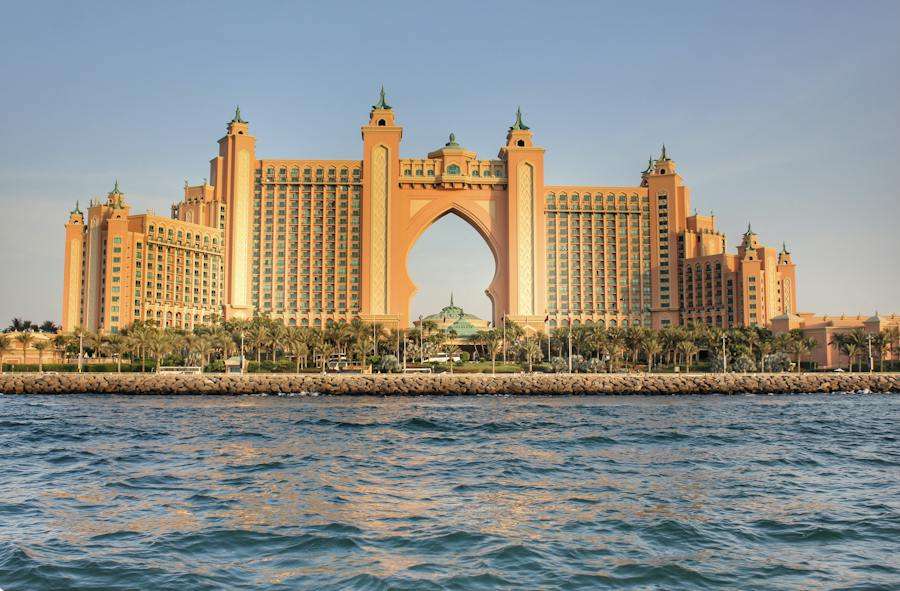
A purpose-built resort is a tourist destination that has been planned and built specifically for tourism. Rather than growing gradually from an existing town or village, it is designed from scratch, usually over a short period of time, with accommodation, attractions, facilities and transport links all planned together.
Before development, the site may have been an empty stretch of coastline, a quiet fishing village, a forest or a mountain valley. Developers, often working with governments, then create everything a tourist might need.
This makes them very different from traditional resorts, such as Blackpool, Brighton or Scarborough, which grew over many years around existing towns, often after the arrival of the railways.
Purpose-built resorts vs traditional resorts
The table below compares the two types of resort.
| Feature | Purpose-built resort | Traditional resort |
|---|---|---|
| How it developed | Planned and built for tourism in a short period | Grew gradually from an existing settlement |
| Layout | Carefully planned, often zoned | Mixed and sometimes unplanned |
| Facilities | Modern and designed around tourists | A mix of old and new |
| Local population | Often small, many workers commute in | Large, established community |
| Character | Can feel artificial or similar to other resorts | Often has historic charm and local culture |
| Examples | Cancun, La Grande Motte, Center Parcs | Blackpool, Benidorm’s old town, Brighton |
Some destinations combine both. Benidorm, for example, began as a fishing village but expanded rapidly with planned high-rise development from the 1950s onwards.
Key features of a purpose-built resort
Although they vary in size and style, most of these resorts share several features:
- Planned layout – zones for hotels, shops, entertainment and staff housing.
- Modern accommodation – often large hotels, apartments, villas or lodges.
- A wide range of facilities on site – pools, restaurants, bars, spas, sports and entertainment.
- Good transport links – many are built near new airports, motorways or railway stations.
- A focus on one main attraction – such as a beach, ski slopes, a theme park or a forest.
- Often all-inclusive – visitors can stay on site for their whole holiday.
These features are designed to make the holiday easy and convenient. However, as we will see later, they can also mean that tourists rarely leave the resort to spend money in local communities.
Types of purpose-built resorts
These resorts come in several different forms:
| Type | Description | Example |
|---|---|---|
| Coastal resorts | Built along beaches for sun, sea and sand holidays | Cancun (Mexico), Nusa Dua (Bali) |
| Ski resorts | Built high in the mountains with direct access to the slopes | Avoriaz and Flaine (French Alps) |
| Holiday villages and parks | Self-contained sites with lodges and indoor facilities | Center Parcs (UK and Europe) |
| Theme park resorts | Hotels, parks and entertainment built around a theme park | Disneyland Paris |
| Integrated resorts | Large complexes combining hotels, casinos, shopping and entertainment | Sun City (South Africa) |
| Island and marine resorts | Built on islands or reclaimed land | Palm Jumeirah (Dubai) |
7 brilliant examples of purpose-built resorts

Here are seven well-known examples that make great examples in exam answers:
- Cancun, Mexico – developed by the Mexican government from around 1970 on a narrow strip of land on the Caribbean coast, it is now one of the most visited beach destinations in the Americas.
- Nusa Dua, Bali – a planned enclave of large hotels developed from the 1970s, designed to keep mass tourism separate from local villages.
- La Grande Motte, France – built in the 1960s on the Mediterranean coast as part of a government plan to develop tourism in the Languedoc-Roussillon region, famous for its pyramid-shaped apartment blocks.
- Avoriaz, France – a car-free ski resort built in the 1960s, with wooden-clad buildings designed to blend into the mountains.
- Center Parcs, UK – forest holiday villages, the first UK site being Sherwood Forest, with lodges, a covered pool complex and activities.
- Disneyland Paris, France – opened in 1992 east of Paris, with theme parks, hotels, shopping and its own railway station.
- Palm Jumeirah, Dubai – an artificial palm-shaped island lined with luxury hotels, villas and attractions such as Atlantis The Palm.
Each of these destinations was planned with tourism as its main purpose, and each shows how planning can create a successful destination from very little.
Purpose-built resorts in the UK
You do not have to travel abroad to find purpose-built resorts. The UK has a long history of planned holiday destinations.
Holiday camps were among the earliest examples. Billy Butlin opened his first holiday camp at Skegness in the 1930s, offering working families an affordable holiday with accommodation, meals and entertainment all on one site. Butlin’s still operates resorts at Skegness, Minehead and Bognor Regis today.
Holiday villages such as Center Parcs and Bluestone in Pembrokeshire, Wales, are more recent examples. They are built in woodland or countryside settings and offer lodges, swimming pools, outdoor activities and restaurants, so guests have little need to leave during their stay.
Holiday parks, run by companies such as Haven and Parkdean Resorts, are also common along the UK coast. They usually combine static caravans or lodges with pools, play areas and evening entertainment.
These UK examples show that the same principles apply whatever the scale: careful planning, everything on site and a strong focus on convenience for guests. They are also popular with domestic tourists, who may prefer not to fly.
Many UK holiday parks are especially busy during school holidays, which shows how seasonality affects even planned destinations. Operators often use lower prices and short breaks to attract visitors at quieter times of the year.
Why are purpose-built resorts developed?
Governments and private companies create planned resorts for a range of reasons:
- To earn foreign exchange from international tourists
- To create jobs in areas with high unemployment
- To develop poorer regions and spread wealth more evenly across a country
- To make use of natural assets, such as beaches or mountains, that were not being used
- To control tourism, keeping large numbers of visitors in one planned area
- To compete with other destinations by offering modern, high-quality facilities
International organisations such as the World Bank have, at times, supported tourism development projects as a way of encouraging economic growth in developing countries.
The positive impacts of purpose-built resorts

When they are well planned, these resorts can bring significant benefits:
- Employment – thousands of jobs in construction, hospitality, transport and entertainment.
- Infrastructure – new roads, airports, water supplies and electricity that can also benefit local people.
- Economic growth – visitor spending and tax revenue can boost the regional and national economy.
- Controlled impacts – concentrating tourists in one area can protect more fragile places elsewhere.
- High-quality visitor experience – modern facilities and convenience appeal to many tourists.
These links to the wider economic impacts of tourism make this type of development attractive to governments.
The negative impacts of purpose-built resorts
Planned resorts are also widely criticised. Common problems include:
- Economic leakage – when resorts are owned by foreign companies and import food and supplies, much of the money leaves the country.
- Enclave tourism – tourists stay inside the resort, so local businesses gain little.
- Environmental damage – building on coastlines and mountains can destroy habitats such as mangroves, dunes and coral reefs.
- Low-paid, seasonal jobs – many jobs are poorly paid, and senior roles may go to people from outside the area.
- Loss of local culture – resorts may feel the same wherever they are in the world.
- Social divisions – local people may be excluded from beaches or facilities.
You can learn more about this issue in my article on enclave tourism.
Case study: Cancun, Mexico
Cancun is perhaps the best-known purpose-built resort in the world and makes an excellent case study.
Before development, the area was a lightly populated stretch of coastline in the state of Quintana Roo. The Mexican government chose the site because of its white sand beaches, warm Caribbean sea and closeness to the United States. A planned hotel zone was built along a long sandbar, with a separate town for workers on the mainland.
Positives: Cancun created large numbers of jobs, attracted major hotel brands and airlines, and helped to make tourism one of Mexico’s most important industries. It also became a gateway to the wider Riviera Maya and Mayan heritage sites such as Chichen Itza.
Negatives: Development caused damage to mangroves, dunes and the coastline, and beach erosion has been a recurring problem. There is also a sharp contrast between the luxury hotel zone and some of the poorer neighbourhoods where many workers live.
The future of purpose-built resorts
Many newer resorts are trying to learn from the mistakes of the past. Modern planned resorts increasingly aim to:
- Use renewable energy and save water
- Protect natural habitats during construction
- Employ and train local people, including for management roles
- Buy food and supplies from local producers
- Encourage guests to explore local towns, markets and attractions
This reflects the principles of sustainable tourism promoted by organisations such as UN Tourism.
Why purpose-built resorts matter for your exams
Purpose-built resorts appear in Cambridge IGCSE Travel and Tourism (0471), section 1.6, and in Cambridge AS and A Level Travel and Tourism (9395), topic 2.1. You may be asked to describe the features of a resort of this kind, explain why one was developed, or assess its impacts on the local area.
For the best marks, remember to:
- Use a named example, such as Cancun or Center Parcs
- Explain both positive and negative impacts
- Link impacts to economic, social and environmental themes
- Reach a balanced judgement where the question asks you to evaluate
Purpose-built resorts: to conclude
Purpose-built resorts are destinations planned and built specifically for tourism, from beach resorts such as Cancun to ski resorts such as Avoriaz and holiday villages such as Center Parcs. They can create jobs, infrastructure and income, but they are also criticised for economic leakage, enclave tourism and environmental damage. The most successful examples today are those planned with sustainability and local communities in mind.
Purpose-built resorts: FAQs
Below are answers to some of the most common questions about purpose-built resorts.
What are purpose-built resorts?
They are destinations designed and built specifically for tourism, with accommodation, facilities and attractions planned together rather than growing from an existing town.
What are examples of purpose-built resorts?
Examples include Cancun in Mexico, Nusa Dua in Bali, La Grande Motte and Avoriaz in France, Center Parcs in the UK and Disneyland Paris.
What are the advantages of purpose-built resorts?
They create jobs, bring new infrastructure, generate income and can concentrate tourists in one area, protecting other places from overcrowding.
What are the disadvantages of purpose-built resorts?
They can cause economic leakage, enclave tourism, environmental damage and a loss of local character.
Is Blackpool a purpose-built resort?
No. Blackpool is a traditional resort that grew from an existing settlement, largely after the railway arrived in the nineteenth century.
Purpose-built resorts: further reading
If you found this article helpful, you may also like these articles:
- Enclave tourism explained
- Mass tourism explained
- Economic impacts of tourism
- Types of tourist destinations
- Types of all-inclusive resorts
