

Tourism has many economic impacts, and it is important to understand what they are and how destinations can maximise the positive economic impacts of tourism while minimising the negative ones.
Tourism is one of the largest economic sectors in the world. According to the World Travel and Tourism Council (WTTC), travel and tourism contributed a record US$11.6 trillion to the global economy in 2025, almost 10% of global GDP. While its exact value is difficult to measure, the economic potential of tourism is indisputable, and it is because of the positive economic impacts that most destinations choose to develop tourism in the first place.
There is, however, more than meets the eye in most cases. The positive economic impacts of tourism are often not as significant as anticipated. Furthermore, tourism activity tends to bring with it unwanted and often unexpected negative economic impacts of tourism.
This article explains why it is important to understand the economic impacts of tourism and outlines the main positive and negative economic impacts, with examples and case studies.
At the end of the article, you will find further reading on the economic impacts of tourism for tourism stakeholders, students and anyone interested in learning more.
The economic impacts of tourism: Why Governments invest
Tourism brings with it huge economic potential for a destination that wishes to develop their tourism industry. Employment, currency exchange, imports and taxes are just a few of the ways that tourism can bring money into a destination.

International tourism has grown rapidly over recent decades. International tourist arrivals rose from around 25 million in 1950 to almost 1.5 billion in 2019, fell sharply during the COVID-19 pandemic and reached a record 1.52 billion in 2025 (UN Tourism).
There are a number of reasons for this growth including improvements in technology, increases in disposable income, the growth of budget airlines and consumer desires to travel further, to new destinations and more often.
Here are some key facts about the economic importance of the tourism industry globally:
- Travel and tourism contributed US$11.6 trillion to the global economy in 2025, equivalent to 9.8% of global GDP (WTTC)
- Travel and tourism supported 366 million jobs in 2025, around 10.9% of global employment, and accounted for one in three new jobs created worldwide (WTTC)
- International tourism receipts reached an estimated US$1.9 trillion in 2025, rising to around US$2.2 trillion in total export revenues once passenger transport is included (UN Tourism)
- Tourism accounted for 6% of all world exports of goods and services in 2023, and 23% of trade in services (UN Tourism)
- Before the pandemic, tourism was the world’s third-largest export category, after fuels and chemicals (UN Tourism)
- Tourism accounts for more than half of all exports in 23 destinations, most of them small island developing states (UN Tourism)
- There were a record 1.52 billion international tourist arrivals in 2025 (UN Tourism)
For the latest data on the economic value of tourism, see the WTTC Economic Impact Research and the UN Tourism World Tourism Barometer.
In short, governments pursue tourism as an economic policy because:
- it brings in foreign exchange
- it generates employment
- it creates economic activity
Building and developing a tourism industry, however, involves a lot of initial and ongoing expenditure. The airport may need expanding. The beaches need to be regularly cleaned. New roads may need to be built. All of this takes money, which is usually a financial outlay required by the Government.
For governments, decisions have to be made regarding their expenditure. They must ask questions such as:
How much money should be spent on the provision of social services such as health, education, housing?
How much should be spent on building new tourism facilities or maintaining existing ones?
If financial investment and resources are provided for tourism, the issue of opportunity costs arises.
Opportunity cost means that by spending money on tourism, that money cannot be spent somewhere else. Budgets are limited, so choosing one option means giving up another.
In tourism, this means that the money and resources that are used for one purpose may not then be available to be used for other purposes. Some destinations have been known to spend more money on tourism than on providing education or healthcare for the people who live there, for example.
This can be said for other stakeholders of the tourism industry too.
There are a number of independent, franchised or multinational investors who play an important role in the industry. They may own hotels, roads or land amongst other aspects that are important players in the overall success of the tourism industry. Many businesses and individuals will take out loans to help fund their initial ventures.
So investing in tourism is big business, that much is clear. But what are the positive and negative impacts of this?

Video: The economic impacts of tourism

Positive economic impacts of tourism
Most destinations choose to invest their time and money into tourism because of the positive economic impacts that they hope to achieve. The most common economic benefits of tourism are explained below.

Foreign exchange earnings

One of the biggest benefits of tourism is the ability to make money through foreign exchange earnings.
Tourism expenditure generates income for the host economy. The money that a country makes from tourism can then be reinvested in the economy. How a destination manages this income differs around the world. Some destinations spend it on growing their tourism industry further, some invest in public services such as education or healthcare, and in some destinations weak governance means that tourism revenue does not always reach the people who need it most.
Some currencies are worth more than others, so some countries target tourists from particular source markets. In many lower-income destinations, tourists’ foreign currency is highly valued, and workers in the tourism industry may even prefer tips in pounds, dollars or euros rather than the local currency.
Currencies that are strong are generally the most desirable currencies. This typically includes the British pound, the US, Australian and Singapore dollars and the Euro.
According to UN Tourism, tourism accounted for 6% of all world exports of goods and services in 2023, and for more than half of all exports in 23 destinations, mostly small island developing states. For many developing countries, tourism is the main source of export earnings.
Contribution to government revenues
Tourism can help to raise money that is then invested elsewhere by the government. There are two main ways that this money is accumulated.
Direct contributions are generated by taxes on incomes from tourism employment and tourism businesses and things such as departure taxes.
Tourist taxes differ considerably between destinations. Japan, for example, tripled its International Tourist Tax (a departure tax) from ¥1,000 to ¥3,000 per person from July 2026, partly to fund measures to manage overtourism. Bhutan charges most international visitors a Sustainable Development Fee for every night of their stay, and Venice charges day-trippers an access fee on peak days.
Many cities around the world, including Paris, Amsterdam, Barcelona and Edinburgh, also charge an accommodation tax on overnight stays.
According to the WTTC, the total (direct, indirect and induced) contribution of travel and tourism to the global economy reached US$11.6 trillion in 2025.
Indirect contributions come from goods and services supplied to tourists which are not directly related to the tourism industry.
Take food, for example. A tourist may buy food at a local supermarket. The supermarket is not directly associated with tourism, but if it wasn’t for tourism its revenues wouldn’t be as high because the tourists would not shop there.
There is also the income that is generated through induced contributions. This accounts for money spent by the people who are employed in the tourism industry. This might include costs for housing, food, clothing and leisure activities, amongst others. This all contributes to an increase in economic activity in the area where tourism is being developed.
Employment generation

The rapid expansion of international tourism has led to significant employment creation. From hotel managers to theme park operatives to cleaners, tourism creates many employment opportunities. The WTTC estimates that travel and tourism supported 366 million jobs worldwide in 2025, around 10.9% of all jobs. For more on careers in this sector, see this list of jobs in travel and tourism.
There are two types of employment in the tourism industry: direct and indirect.
Direct employment includes jobs that are immediately associated with the tourism industry. This might include hotel staff, restaurant staff or taxi drivers, to name a few.
Indirect employment includes jobs which are not technically based in the tourism industry, but are related to the tourism industry. Take a fisherman, for example. He does not have any contact or dealings with tourists, but he does sell his fish to a hotel which serves tourists. He is therefore indirectly employed by the tourism industry, because without the tourists he would not be supplying the fish to the hotel.
It is because of these indirect relationships, that it is very difficult to accurately measure the economic value of tourism.
It is also difficult to say how many people are employed, directly and indirectly, within the tourism industry.
Furthermore, many informal employments may not be officially accounted for. Think of a tuk-tuk driver in Cambodia or a street seller in The Gambia- these people are not likely to be registered by the state and therefore their earnings are not declared.
It is for this reason that some suggest that the actual economic benefits of tourism may be considerably higher than the recorded figures.
Contribution to local economies
All of the money raised, whether through formal or informal means, has the potential to contribute to the local economy.
If sustainable tourism is demonstrated, money will be directed to areas that will benefit the local community most.
There may be pro-poor tourism initiatives (tourism which is intended to help the poor) or volunteer tourism projects.
The government may reinvest money in public services, and money earned by tourism employees will be spent in the local community. This is known as the tourism multiplier effect.
The multiplier effect relates to spending in one place creating economic benefits elsewhere. Tourism can do wonders for a destination in areas that may seem to be completely unrelated to tourism, but which are actually connected somewhere in the economic system.

Here is an example.
A tourist buys an omelet and a glass of orange juice for their breakfast in the restaurant of their hotel. This simple transaction actually has a significant multiplier effect. Below are just a few of the effects of the tourist buying this breakfast.
Example 1
The waiter is paid a salary- he spends his salary on schooling for his kids- the school has more money to spend on equipment- the standard of education at the school increases- the kids graduate with better qualifications- as adults, they secure better paying jobs- they can then spend more money in the local community…
Example 2
The restaurant purchases eggs from a local farmer- the farmer uses that money to buy some more chickens- the chicken breeder uses that money to improve the standards of their cages, meaning that the chickens are healthier, live longer and lay more eggs- they can now sell the chickens for a higher price- the increased money made means that they can hire an extra employee- the employee spends his income in the local community…
Example 3
The restaurant purchases the oranges from a local supplier- the supplier uses this money to pay the lorry driver who transports the oranges- the lorry driver pays road tax- the Government uses said road tax income to fix pot holes in the road- the improved roads make journeys quicker for the local community…
So the breakfast that the tourist probably did not give another thought to has the potential to have a significant economic impact on the local community.
Development of the Private Sector

The private sector has continuously developed within the tourism industry, and owning a tourism business can be extremely profitable, making this a positive economic impact of tourism.
While many tourism businesses are multinational, internationally owned organisations (which contribute towards economic leakage), many others are owned by local people.
Local ownership has become even more common in recent years due to the rise of the sharing economy and platforms such as Airbnb, which make it easier for local people to start tourism businesses.
Every destination is different with regards to how they manage the development of the private sector in tourism.
Some destinations restrict foreign ownership of land or businesses in order to protect local businesses and ensure that more of the profits stay in the local economy, while others offer incentives to attract foreign investment. In Italy, for example, the café culture is dominated by small, independently owned coffee bars, and international coffee chains have only a small presence.
Negative economic impacts of tourism
Unfortunately, the tourism industry doesn’t always smell of roses and there are also several negative economic impacts of tourism.
There are many hidden costs to tourism, which can have unfavourable economic effects on the host community.
Whilst such negative impacts are well documented in the tourism literature, many tourists are unaware of the negative effects that their actions may cause. Likewise, many destinations that are inexperienced or uneducated in tourism and economics may not be aware of the problems that can occur if tourism is not managed properly.
The most significant negative economic impacts of tourism are outlined below.
Leakage

Economic leakage in tourism is one of the major negative economic impacts of tourism. This is when money spent does not remain in the country but ends up elsewhere; therefore limiting the economic benefits of tourism to the host destination.
The biggest culprits of economic leakage are multinational and internationally-owned corporations, all-inclusive holidays and enclave tourism.
Read more in this detailed article: Economic leakage in tourism explained.
Infrastructure cost

Another one of the negative economic impacts of tourism is the cost of infrastructure. Tourism development can cost the local government and local taxpayers a great deal of money.
Tourism may require the government to improve airports, roads and other infrastructure, which is costly. For example, the UK government backed the expansion of London Heathrow in 2025. The third runway alone is estimated to cost around £21 billion, rising to around £33 billion including new terminal capacity, although Heathrow says that the project will be privately financed.
Public money spent on tourism infrastructure may reduce the funding available for other critical areas such as education and health, as outlined above in the discussion of opportunity costs.
Increase in prices

One of the most obvious economic impacts of tourism is that the very presence of tourism increases prices in the local area.
For example, a can of soft drink bought in a hotel shop or a beachfront bar will often cost far more than the same can bought in a local shop just a short walk away.
Increasing demand for basic services and goods from tourists will often cause price hikes that negatively impact local residents whose income does not increase proportionately.
Tourism development and the related rise in real estate demand may dramatically increase building costs and land values. This can force local people to move away from areas where tourism is concentrated, a process known as gentrification. In cities such as Barcelona, Lisbon and Amsterdam, the growth of short-term holiday rentals has been linked to rising rents for local residents.
Taking measures to ensure that tourism is managed sustainably can help to mitigate this negative economic impact of tourism. Techniques such as employing local people, limiting the number of all-inclusive hotels and encouraging the purchasing of local products and services can all help.
Economic dependence of the local community on tourism
Another major economic impact of tourism is dependency. Many countries run the risk of becoming too dependent on tourism, focusing all of their efforts on the tourism industry. While this can work well, it is also risky.
If for some reason tourism begins to lack in a destination, then it is important that the destination has alternative methods of making money. If they don’t, then they run the risk of being in severe financial difficulty if there is a decline in their tourism industry.
In The Gambia, for instance, tourism contributes around 20% of GDP and 15% of employment, according to the World Bank. In the Maldives, tourism is the largest industry and accounts for more than a quarter of GDP, and in 23 destinations, mostly small island developing states, tourism accounts for more than half of all exports.
There are a number of reasons that tourism could decline in a destination.
The Gambia experienced this in 2017, when its tourism industry suffered a double hit. The first was political instability following a disputed election, which put many tourists off visiting, and the second was the collapse of the UK airline Monarch, which had a large share of the flights to The Gambia. A few years later, the COVID-19 pandemic devastated tourism-dependent economies around the world.
Other issues that could result in a decline in tourism include economic recession, natural disasters, political unrest and changing tourism trends. Over-reliance on tourism carries risks for tourism-dependent economies, which can have devastating consequences.
Foreign Ownership and Management
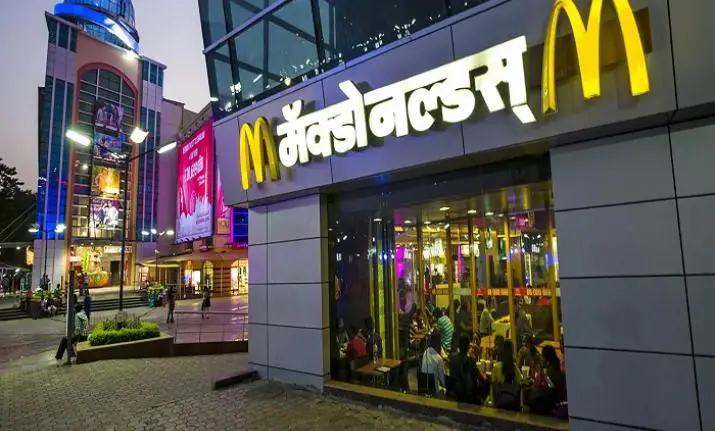
Another negative economic impact of tourism is foreign ownership and management.
As enterprise in the developed world becomes increasingly expensive, many businesses choose to go abroad. Whilst this may save the business money, it is usually not so beneficial for the economy of the host destination.
Foreign companies often bring with them their own staff, thus limiting the economic impact of increased employment. They will usually also export a large proportion of their income to the country where they are based. You can read more on this in this article on economic leakage in tourism.
Economic impacts of tourism: Conclusion
Tourism is a significant economic driver the world over, contributing almost 10% of global GDP and supporting hundreds of millions of jobs. However, not all of the economic impacts of tourism are positive. To ensure that the benefits of tourism are maximised and the costs minimised, careful planning and management of the tourism industry is required. The economic impacts of tourism should also be considered alongside the social impacts and environmental impacts of tourism.
Economic impacts of tourism: FAQs
Below are answers to some of the most common questions about economic impacts of tourism.
What are the economic impacts of tourism?
The economic impacts of tourism are the effects that tourism has on the economy of a destination. Positive impacts include foreign exchange earnings, tax revenue, jobs and business opportunities. Negative impacts include economic leakage, infrastructure costs, rising prices and over-dependence on tourism.
What are the positive economic impacts of tourism?
The main positive economic impacts of tourism are foreign exchange earnings, contributions to government revenues, employment generation, contributions to local economies through the multiplier effect and the development of the private sector.
What are the negative economic impacts of tourism?
The main negative economic impacts of tourism are economic leakage, infrastructure costs, rising prices for local people, economic dependence on tourism and foreign ownership of tourism businesses.
How much does tourism contribute to the global economy?
According to the WTTC, travel and tourism contributed a record US$11.6 trillion to the global economy in 2025, equivalent to 9.8% of global GDP, and supported 366 million jobs.
What is the tourism multiplier effect?
The tourism multiplier effect describes how money spent by tourists circulates through the local economy, as businesses and employees who receive it spend it again, creating further economic activity.
What is economic leakage in tourism?
Economic leakage occurs when money spent by tourists leaves the destination, for example through foreign-owned hotels, imported goods or all-inclusive packages booked with overseas companies.
Further reading on the economic impacts of tourism
If you found this article on the economic impacts of tourism useful, you may also be interested in these:
- Environmental impacts of tourism
- The 3 types of travel and tourism organisations
- 150 types of tourism! The ultimate tourism glossary
- 50 fascinating facts about the travel and tourism industry
- The tourism multiplier effect explained
- Economic leakage in tourism
- Social impacts of tourism
