

There are many different types of tourist destinations, which support different types of tourism. To ensure that tourism is profitable and sustainable, it is important to understand the different types of tourist destinations and the types of tourists they attract. This article explains the nine main types of tourist destinations, with examples and case studies.
What is a tourism destination?
A tourist destination is a place or area that relies heavily on the economic benefits of tourism.
A tourist destination can be large, for example a city. It can also be small, for example a small coastal resort or village.
In fact, the term tourism destination is somewhat subjective, and there isn’t really a universal definition. In other words, what one person may say is a ‘destination’, another person may not agree.
A simple definition of a tourist destination is:
A tourist destination is any area, large or small, that attracts and caters for tourists, with tourism being the dominant, or one of the dominant, income generators for the area.
The types of tourism destinations
There are different types of tourist destinations around the world.

No two destinations are the same, but destinations can generally be grouped into categories.
The most common different categories of tourist destinations are as follows:
- Beach areas
- Natural areas
- Towns and cities
- Winter sport areas
- Areas known for culture and heritage

Each of these categories is explained below, with examples and a short case study of each type of destination.
Beach areas

Beach areas are popular types of tourist destinations.
Some people travel a long way to reach a beach, whereas other people may only travel a short distance. Beach tourism is therefore popular with both domestic tourists and international tourists.
Beach areas are not all of the same. In fact, beach areas vary considerably! Islands, resorts and secluded spots, make up just three different types of beach areas.
Islands
Examples of islands: Bali (Indonesia), Jamaica (Caribbean), Maldives, Koh Lanta (Thailand), Isle of Wight (UK), Galapagos Islands (Ecuador).
Island tourism is a popular type of tourism.
Islands are land masses that are surrounded by water. They are separated from the mainland. As a result, islands have long coastlines.
Many islands are lined with beaches. Some of these are tropical, with soft sands and warm waters. Others may boast temperate climates, pebbled beaches, cliffs edges and rock faces.
Because of their abundant beaches, islands are a popular place for beach tourism to occur.

Case study: Koh Lipe, Thailand
Koh Lipe is a small island in the Andaman Sea in the far south of Thailand, close to the border with Malaysia. It lies within Tarutao National Marine Park.
The island is known for its white sand beaches, clear water and coral reefs, and for its laid-back atmosphere, with long-tail boats, beach bars and street food.
Koh Lipe is so small that it can be crossed on foot in a short time. Its rapid growth in popularity has put pressure on its water supply, waste management and reefs, making it a good example of the challenges facing small island destinations.
Beach resorts
Examples of beach resorts: Magaluf, Majorca (Spain), Malia, Crete (Greece), Boracay (Philippines), Kuta, Bali (Indonesia), Manuel Antonio (Costa Rica).
Beach resorts are areas that are specifically developed for tourism. They will generally consist of the beach area, hotels, bars and restaurants and entertainment venues and activities.
Usually, a resort will be developed with a top-down approach in mind, meaning that tourism development planning occurs, at least to begin with, at the Government level.
This enables private travel and tourism organisations to then develop their own tourism provision within the beach resort area.
In recent years, the concept of the holiday resort has changed slightly. Nowadays, not only does the term ‘beach resort’ refer to the tourism area, but it is also the term often used by private travel and tourism organisations who build all-inclusive facilities.
To avoid confusion, this article refers to these all-inclusive developments as ‘resort hotels’.
A resort hotel is when a private organisation develops tourist provision within a contained area. A form of enclave tourism, this will generally include a private beach, bars, restaurants, hotel accommodation, leisure facilities and entertainment options.
These types of development promote economic leakage in tourism and are renowned for their negative social impacts.

Case study: Phu Quoc Island, Vietnam
Phu Quoc Island in Vietnam was once described as a hidden gem, with pristine, undeveloped beaches.
Over the past decade, the island has undergone rapid tourism development, with large resorts, theme parks, a cable car and casinos built along its coastline, supported by an international airport and visa-free entry for many international visitors.
Much of the beachfront is now occupied by large private resorts, many operated by international hotel brands, which can limit public access to the beaches for local people and for visitors staying elsewhere.
Development on the island is changing its landscape, society and economy. Globalisation, economic leakage and rising land prices are all issues facing the island, making Phu Quoc a useful example of why tourism must be sustainably developed and managed.
Secluded beaches
Examples of secluded beaches: Green Island Beach, Antigua (Caribbean), Hidden Beach, Puerto Vallarta (Mexico), Breivika, Vaeroy Island (Norway), Vatersay Beach, Outer Hebrides (Scotland).
Secluded beach areas are just as it says on the tin- areas of beach that are away from built up areas.
Secluded beach areas are generally one of two things:
1- They are not developed areas and there are not many people live nearby. The transport network is not well developed and it is not easy for tourists to reach the area. The areas may be protected areas.
2- They are areas reserved for exclusive tourism. The most expensive and luxurious beach tourism often occurs on secluded beaches. Tourists may arrive by private plane or boat. The price of a holiday here is high.
Many people search for secluded beaches because they wish to enjoy unspoilt beaches and to get away from the crowds.
These areas may not be cleaned as regularly as busier beaches, so you may find seaweed or washed-up litter on the shoreline.
Secluded beaches often have few or no amenities, with no shade from the sun and nowhere to buy water or use the toilet, so visitors need to be well prepared.

Case study: Tortuga Bay, Galapagos Islands
Tortuga Bay, on Santa Cruz Island in the Galapagos Islands, is one of the archipelago’s most famous beaches.
It can only be reached by a walk of around 45 minutes along a paved path, or by boat, and it is open to visitors only during daylight hours. Marine iguanas, sea turtles and birds can often be seen on the beach.
Tourism in the Galapagos is tightly controlled to protect its unique wildlife. Visitors must pay a national park entrance fee, which doubled to US$200 for most international adult visitors in 2024, and many sites can only be visited with a licensed guide. Because the animals are protected, they are not afraid of people, and visitors can see them up close. Read more about ecotourism.
Natural areas

Natural areas are popular types of tourist destinations too. Natural areas can be broken down into different types of natural areas, such as mountains, forests and countryside areas.
Mountain areas
Mountain area examples: The Alps (France), The Canadian Rockies (Canada), The Himalayas (Nepal), Mount Kilimanjaro (Tanzania).
Mountain areas are popular with tourists.
There are many different activities that you can do in the mountains, such as mountain climbing, hiking, skiing, horse riding, quad biking and more.
The activities available to tourists depends on the season, the altitude and the weather.

Case study: Mount Kilimanjaro, Tanzania
At 5,895 metres, Mount Kilimanjaro is the highest mountain in Africa and the world’s tallest free-standing mountain. Tens of thousands of people attempt to climb it each year.
No technical climbing skills are needed, but the climb is physically and mentally demanding, mainly because of the high altitude. Climbers must be accompanied by licensed guides, and the industry supports thousands of local guides and porters, making Kilimanjaro an important part of Tanzania’s tourism economy. Ethical operators ensure that porters are paid fairly and carry reasonable loads.
Forests
Examples of forests: Daintree Forest (Australia), Redwood National Park (USA), Sagano Bamboo Forest (Japan), Great Bear Rainforest (Canada).
Forests are popular types of tourist destinations.
There are forests all over the world, although the flora and fauna differs according to the geographical location, they are share one thing in common- trees!
Many tourists choose to travel to forest areas. Some travellers will visit for a short time and others may stay for days or weeks.
There are many tourist facilities and resorts that have been developed within forests. In the UK, the Center Parcs chain is probably the most well-known. These holiday parks feature chalets and villas in a forest area. There are many activities such as rock climbing and mountain biking. There are also many facilities provided such as swimming pools and restaurants.

Case study: Monteverde Cloud Forest, Costa Rica
The Monteverde Cloud Forest Reserve in Costa Rica is one of the world’s best-known cloud forests. Visitors come to walk its trails and hanging bridges and to see wildlife such as hummingbirds, quetzals and sloths. It is a well-known example of ecotourism, with entrance fees helping to fund conservation and the local community.
Countryside areas
Examples of countryside areas: The Peak District (UK), Ontario wine country (Canada), Cappadocia (Türkiye), Sapa (Vietnam), Mendoza (Argentina).
Countryside areas, otherwise known as rural tourism areas, actually encompass both of the categories above. Countryside isn’t just open landscape- it includes mountain areas, lakes, hills, forests, woods, plains and fields.
Countryside areas are popular types of tourist destinations. People can get some fresh air, relax and take part in a wide range of activities.

Case study: Somerset, UK
The United Kingdom has many popular countryside destinations. Somerset, in the south west of England, is a good example of a rural tourism destination.
Popular activities include hiking the Mendip Hills, caving in Cheddar, visiting the cathedral in Wells and admiring the beauty of the Strawberry Line. Axbridge is a traditional English village that attracts many visitors.
Towns and cities

Examples of tourist cities: Paris, Rome, London, New York, Sydney, Shanghai, Cape Town, Rio de Janeiro.
Towns and cities are popular types of tourist destinations.
One of the reasons for this popularity is accessibility. Typically, large towns and cities are well connected. Cities usually have at least one airport and many low cost airlines will offer affordable flights, especially within Europe.
Towns and cities attract many different types of tourists. Whether you are travelling for a stag party, a business trip or a family getaway, there is something to suit everyone- and that’s what makes towns and cities such popular types of tourist destinations!

Case study: Bangkok, Thailand
The capital city of Thailand is regularly ranked among the most visited cities in the world by international arrivals.
Bangkok is a major transport hub for South East Asia, which means that many tourists pass through the city at the start or end of a trip around the region.
Visitors are attracted by its temples and Buddhist culture, street food, markets, shopping and nightlife, as well as its relatively low prices. Bangkok is also an important destination for business tourism and medical tourism.
Winter sport areas

Examples of winter sports destinations: Whistler (Canada), Niseko (Japan), Serre Chevalier (France), Alpbach (Austria).
Winter sports areas are one of the major types of tourist destinations.
Winter sports is a popular form of active sports tourism. People travel to destinations with winter conditions (real or artificial) for a range of winter sport activities.
Popular winter sports activities include:
- Skiing
- Sledging
- Snow mobiling
- Husky riding
- Snow walking
- Snowboarding
- Ice skating
- Tobogganing

Case study: Harbin, China
Harbin, in north-east China, is known for its cold winters and is close to Yabuli, one of China’s best-known ski resorts. The city is most famous for the Harbin International Ice and Snow Sculpture Festival, which usually runs from late December or early January until February and features huge, illuminated ice and snow sculptures. With temperatures often falling below -20°C, Harbin is a unique winter tourism destination.
Areas known for culture and heritage

Examples of areas known for culture and heritage: Angkor Wat (Cambodia), The Great Wall of China (China), Taj Mahal (India), Machu Picchu (Peru), Petra (Jordan).
The final type of tourist destination is areas known for their culture and heritage.
Usually, these destinations feature high on cultural tourism agendas and offer many tourist attractions linked to culture and heritage.
Many of these areas are designated UNESCO World Heritage Sites.
UNESCO World Heritage Sites are areas that have been designated by the United Nations as having cultural, historical, scientific or other form of significance. There are more than 1,200 UNESCO World Heritage Sites around the world.
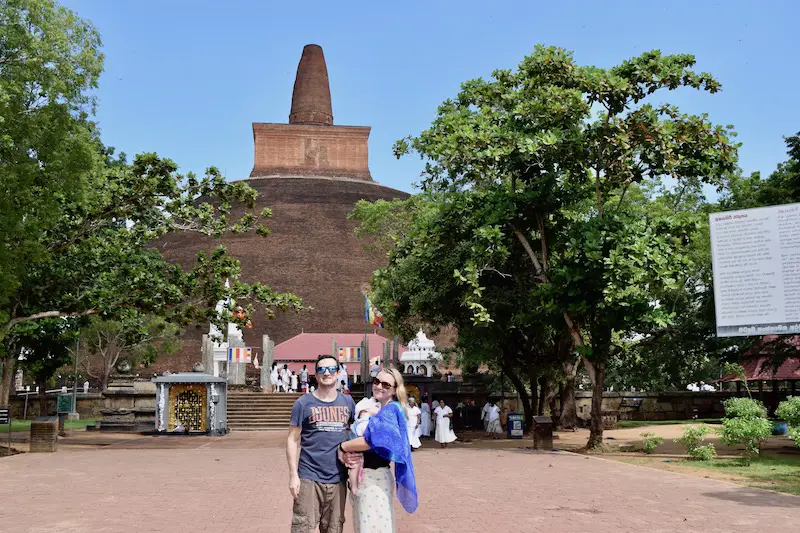
Case study: Anuradhapura, Sri Lanka
Anuradhapura was the first capital of ancient Sri Lanka and is now a UNESCO World Heritage Site. It is famous for its huge dagobas (stupas), ancient monasteries and the sacred Sri Maha Bodhi tree, believed to have been grown from a cutting of the tree under which the Buddha gained enlightenment.
As well as cultural tourists, Anuradhapura attracts large numbers of Buddhist pilgrims, making it an example of religious tourism and pilgrimage tourism.
Video: The different types of tourist destinations

Types of tourist destinations: To conclude
There are many different types of tourist destinations. While they can be roughly grouped into categories, such as beach areas, natural areas, towns and cities, winter sports areas and areas known for culture and heritage, no two tourist destinations are the same. Understanding these categories helps tourism organisations to plan, market and manage destinations sustainably. You can also read about the characteristics of emerging tourism destinations and mature tourism destinations, and the appeal of tourist destinations.
Types of tourist destinations: FAQs
Below are answers to some of the most common questions about types of tourist destinations.
What is a tourist destination?
A tourist destination is any area, large or small, that attracts and caters for tourists, with tourism being one of the main sources of income for the area.
What are the main types of tourist destinations?
The main types of tourist destinations are beach areas (islands, beach resorts and secluded beaches), natural areas (mountains, forests and countryside), towns and cities, winter sports areas and areas known for culture and heritage.
What is an example of a beach resort?
Examples of beach resorts include Magaluf in Majorca, Malia in Crete, Kuta in Bali and Boracay in the Philippines.
What is the difference between a beach resort and a resort hotel?
A beach resort is a tourist area developed around a beach, with hotels, bars, restaurants and entertainment. A resort hotel is a single, often all-inclusive, development that provides everything within one site, a form of enclave tourism.
Why are cities popular tourist destinations?
Cities are popular because they are easy to reach, with airports and good transport links, and offer a wide range of attractions, accommodation, food, shopping and events that appeal to many different types of tourists.
Further reading
- 150 types of tourism! The ultimate tourism glossary
- The 8 Major Types of Cruise
- The 10 Major Types of Events
- 21 Types of Tourists Around The World
- The 3 Major Types Of Airlines + How They Work
