
Would you rather have your bed made and breakfast cooked for you, or would you prefer the freedom of your own kitchen and front door? This simple question sits at the heart of serviced and non-serviced accommodation, one of the most important ways of classifying places to stay in travel and tourism. In this article, serviced and non-serviced accommodation is explained clearly, with real examples of each type and a comparison of their advantages and disadvantages.
This topic comes up regularly in BTEC Travel and Tourism, so it is well worth getting to grips with the key terms. Ready to learn more? Read on…
- What is serviced and non-serviced accommodation?
- What is serviced accommodation?
- 5 types of serviced accommodation
- What is non-serviced accommodation?
- 6 types of non-serviced accommodation
- Serviced and non-serviced accommodation compared
- Hybrid accommodation: blurring the lines
- Quality grading of accommodation
- Who chooses each type of accommodation?
- Advantages and disadvantages for customers
- Trends in serviced and non-serviced accommodation
- Serviced and non-serviced accommodation in your exams
- Serviced and non-serviced accommodation: to conclude
- Serviced and non-serviced accommodation: FAQs
- Serviced and non-serviced accommodation: further reading
What is serviced and non-serviced accommodation?

Accommodation providers can be divided into two broad groups based on the level of service that guests receive during their stay.
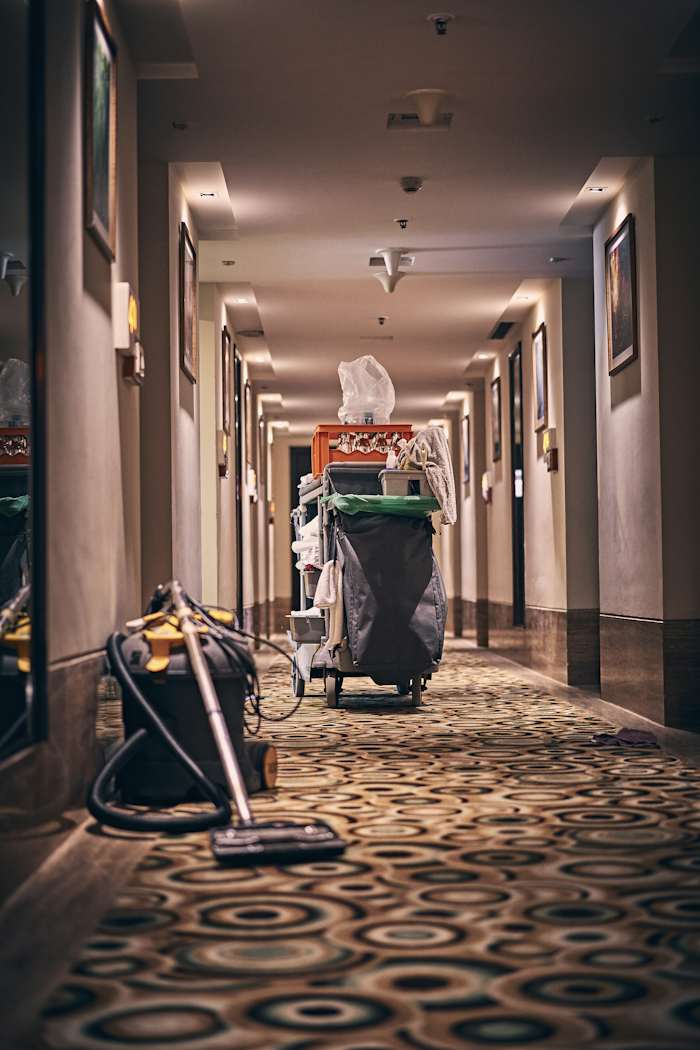
- Serviced accommodation is where staff provide services such as cleaning, bed-making, meals and a reception desk. The price usually includes at least some of these services.
- Non-serviced accommodation (often called self-catering) is where guests look after themselves. They usually prepare their own meals and are responsible for keeping the accommodation clean and tidy during their stay.
The difference between serviced and non-serviced accommodation is not about quality or price. A luxury villa can be non-serviced, while a budget hotel is serviced. It is all about who does the work during the stay. You can see the full range of options in my guide to types of accommodation.
What is serviced accommodation?
Serviced accommodation offers guests a range of services provided by staff. Typical features include:
- a reception or front desk, sometimes open 24 hours
- daily or regular room cleaning and fresh towels
- meals, ranging from breakfast only to full board or all-inclusive
- facilities such as restaurants, bars, room service, spas or meeting rooms
- staff available to help with enquiries, bookings and problems
Because more staff are needed, serviced accommodation tends to have higher running costs per guest. It appeals to customers who want convenience and comfort, such as business travellers, couples on short breaks and older travellers.
Serviced accommodation is often sold on different board bases, which tell the customer which meals are included:
- Room only: no meals included.
- Bed and breakfast: breakfast is included.
- Half board: breakfast and an evening meal are included.
- Full board: breakfast, lunch and an evening meal are included.
- All-inclusive: all meals, snacks and usually many drinks are included.
5 types of serviced accommodation
Here are five common types of serviced accommodation, with examples:
- Hotels: range from luxury properties such as The Savoy in London to large international chains such as Hilton and Marriott. Read more in my guide to types of hotels.
- Budget hotels: offer a simple, standardised product at a low price, such as Premier Inn and Travelodge. Services are limited, but rooms are still cleaned and there is a reception.
- Guest houses: smaller, often family-run properties with a handful of rooms, usually offering breakfast and sometimes an evening meal.
- Bed and breakfasts (B&Bs): typically a private home with a few guest rooms where breakfast is included in the price.
- Inns and pubs with rooms: traditional pubs that offer accommodation as well as food and drink, popular in rural areas and market towns.
Cruise ships are also sometimes described as floating serviced accommodation, as cabins are cleaned daily and meals are included.
What is non-serviced accommodation?
Non-serviced accommodation gives guests a place to stay without the daily services provided by staff. Guests usually have access to a kitchen or cooking facilities and are free to come and go as they please.
Typical features include:
- self-catering facilities such as a kitchen, fridge and cooker
- keys or a code to let yourself in, rather than a staffed reception
- cleaning between guests rather than during the stay
- more space and privacy, often with a living area
- flexibility over meal times and daily routines
Non-serviced accommodation is popular with families, groups of friends, budget travellers and people staying for a week or longer.
Non-serviced accommodation can be found everywhere from city centre apartments to remote farm cottages, which makes it a very flexible part of the accommodation sector. For owners, it can also be a simpler business to run, as fewer staff are needed day to day.
6 types of non-serviced accommodation

Here are six common types of non-serviced accommodation:
- Self-catering cottages and holiday homes: houses or cottages rented by the week or for short breaks, often through letting agencies or organisations such as the National Trust, which offers holiday cottages at some of its properties.
- Holiday parks and static caravans: parks run by companies such as Haven and Parkdean Resorts offer caravans and lodges, often with on-site entertainment.
- Campsites and touring caravan parks: pitches for tents, motorhomes and touring caravans, with shared facilities such as showers.
- Glamping: a more comfortable form of camping in yurts, pods, safari tents or shepherd huts.
- Hostels: budget accommodation with shared dormitories and self-catering kitchens. The YHA runs hostels across England and Wales, and some also offer meals.
- Holiday lets and apartments: rooms, flats and houses booked through platforms such as Airbnb and Vrbo. Learn more in my article Airbnb explained.
Serviced and non-serviced accommodation compared
The table below summarises the main differences between serviced and non-serviced accommodation.
| Feature | Serviced | Non-serviced |
|---|---|---|
| Meals | Provided (at least breakfast in most cases) | Guests self-cater or eat out |
| Cleaning | Regular cleaning during the stay | Cleaned between guests |
| Reception | Usually staffed | Often none; self check-in common |
| Staff costs | Higher | Lower |
| Flexibility | Set times for meals and services | Guests choose their own routine |
| Typical length of stay | One night to a week | Often a week or more |
| Examples | Premier Inn, The Savoy, local B&Bs | Haven, YHA, Airbnb, holiday cottages |
Hybrid accommodation: blurring the lines

In reality, the line between serviced and non-serviced accommodation is becoming less clear. Many providers now offer a mix of both:
- Aparthotels and serviced apartments: apartments with kitchens, combined with a reception desk and optional cleaning. Brands such as Staycity and Citadines are examples.
- Holiday villages: Center Parcs guests stay in self-catering lodges but can use restaurants, spas and activities on site.
- Holiday parks: some offer catered options, clubs and entertainment alongside self-catering caravans.
- Hostels: many offer private rooms, cafés and bars as well as self-catering kitchens.
In an exam, it is fine to explain that a property has features of both types. This shows good understanding of how the industry has changed.
Quality grading of accommodation
Both serviced and non-serviced accommodation can be graded for quality. In England, star rating schemes for hotels, guest accommodation and self-catering properties are run by VisitEngland and the AA, and similar schemes operate in Scotland, Wales and Northern Ireland.
Grading helps customers to compare properties and gives businesses a goal to work towards. However, many customers now rely on online reviews from sites such as Tripadvisor and Booking.com as much as official ratings. You can find out more about the national tourism agencies on the VisitBritain website.
Who chooses each type of accommodation?
Different customer types tend to prefer different types of accommodation:
| Customer type | Likely choice | Reason |
|---|---|---|
| Business traveller | Serviced (hotel) | Convenience, Wi-Fi, meeting rooms and no time to cook |
| Family with young children | Non-serviced (holiday park or cottage) | Space, kitchen and flexibility |
| Backpacker or student | Non-serviced (hostel) | Low cost and chance to meet others |
| Couple on a city break | Serviced (boutique hotel or B&B) | Comfort and being looked after |
| Group of friends | Non-serviced (holiday let) | Shared cost and shared space |
Understanding these choices links closely to market segmentation and to the different types of domestic tourism.
Advantages and disadvantages for customers
Serviced accommodation advantages: guests are looked after, meals are provided, help is always available and there is no cleaning or cooking to do.
Serviced accommodation disadvantages: it can be more expensive, rooms may be smaller and there is less flexibility over meal times.
Non-serviced accommodation advantages: it is often cheaper per person, gives more space and privacy, and allows guests to cook and live as they would at home.
Non-serviced accommodation disadvantages: guests have to do their own cooking and cleaning, there may be no one on site to help, and some properties have minimum stay rules, such as Saturday to Saturday bookings.
Trends in serviced and non-serviced accommodation
Several trends are shaping serviced and non-serviced accommodation today:
- the growth of short-term rental platforms such as Airbnb, which has increased the supply of non-serviced accommodation
- concerns in popular areas such as Cornwall and the Lake District about holiday lets reducing housing for local people
- the popularity of glamping and unusual stays, such as treehouses and converted railway carriages
- the use of technology, such as self check-in and digital room keys, in both serviced and non-serviced properties
- a growing focus on sustainability, including energy efficiency and reducing food waste
These trends are particularly relevant to rural tourism, where holiday lets and campsites are an important source of income.
Serviced and non-serviced accommodation in your exams
Serviced and non-serviced accommodation is covered in BTEC Level 1/2 First Award in Travel and Tourism Unit 1 (B1), BTEC Level 3 National in Travel and Tourism Unit 1 (B2) and the BTEC Tech Award in Travel and Tourism Component 1 (A1).
You might be asked to classify a named property, describe the features of each type, or explain why a particular customer would choose one type over another. Always give real examples and link your answer to the needs of the customer. More revision resources are available on my BTEC Tech Award Travel and Tourism resources page.
Serviced and non-serviced accommodation: to conclude
Serviced and non-serviced accommodation differ mainly in the level of service provided by staff during a stay. Serviced accommodation, such as hotels, guest houses and B&Bs, offers meals, cleaning and a reception, while non-serviced accommodation, such as cottages, holiday parks, campsites, hostels and holiday lets, gives guests more independence. Many modern providers combine features of both to meet changing customer needs.
Serviced and non-serviced accommodation: FAQs
Below are answers to some of the most common questions about serviced and non-serviced accommodation.
What is the difference between serviced and non-serviced accommodation?
Serviced accommodation includes services provided by staff, such as cleaning, meals and a reception, while non-serviced accommodation is self-catering and guests look after themselves.
Is a hostel serviced or non-serviced accommodation?
Hostels are usually classed as non-serviced because guests often use self-catering kitchens, although many hostels now also offer meals and private rooms.
Is Airbnb serviced and non-serviced accommodation?
Most Airbnb properties are non-serviced, as guests let themselves in and look after the property, but some listings are rooms in a host’s home where breakfast may be provided.
What are examples of serviced accommodation?
Examples include hotels such as The Savoy and Premier Inn, guest houses, B&Bs and inns with rooms.
Who uses non-serviced accommodation?
Families, groups of friends, backpackers and people on longer stays often choose non-serviced accommodation for its space, flexibility and lower cost per person.
Serviced and non-serviced accommodation: further reading
If you found this article helpful, you may also like these articles:
