

Volunteer tourism has become an increasingly popular form of travel and a widely discussed topic in academic literature. But what exactly is it, and where does it fit in the broader tourism industry? This article provides a comprehensive definition of volunteer tourism and explains why it has become so popular among volunteers, travellers and academics.
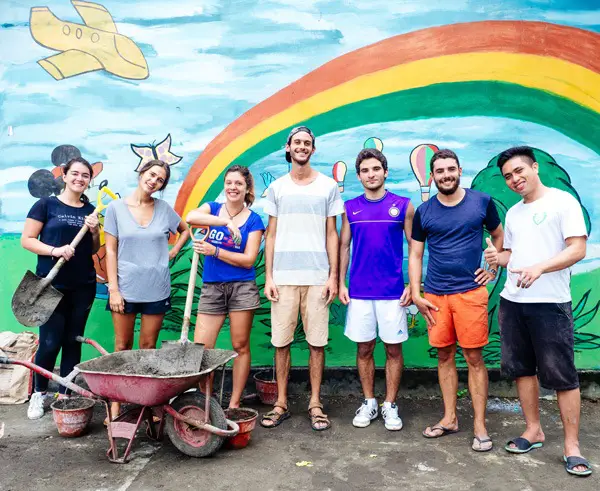
What is volunteer tourism?
Volunteering is an integral part of society and with travelling becoming more accessible, volunteers have begun to appear in the tourism industry.

But what is volunteer tourism?
In brief, volunteer tourism is a type of tourism where an individual will travel abroad to a destination that is predominantly considered ‘undeveloped’ or ‘developing’ to offer their support to those in need. The phrase ‘those in need’, often used in volunteering, typically refers to those who are surrounded by extreme poverty, do not have adequate education and healthcare facilities and frequently have little building infrastructure.
Often in academic discussions you will come across terms such as ‘voluntourism’, ‘volunteerism’, and ‘volunteer travel’. Each term is essentially referring to the same principle: the joining of both ‘volunteering and ‘tourism’.
Volunteer tourism is a specific form of tourism, designed purposely to provide a product or service to meet the needs of a particular market segment, meaning it falls under the umbrella of niche tourism.
Niche tourism has become increasingly popular among tourists seeking ‘different’ and ‘novel’ experiences. Some academics argue that sectors such as volunteer tourism have grown so large that they should no longer be classified as ‘niche’, while others suggest dividing niche markets into macro (large) and micro (small) niches. This debate is discussed in Marina Novelli‘s edited book Niche Tourism: Contemporary Issues, Trends and Cases.
There are many organisations, like Projects Abroad, which offer a range of different volunteer tourism projects. Volunteering opportunities are generally located in developing countries such as Nepal, Ghana, Cambodia and South Africa.
Data on volunteer tourism is limited, but research by ATLAS and Tourism Research and Marketing (TRAM) in 2008 found that volunteers paid an average of around £2,000 per trip.
This usually covers housing, meals, projects, materials, administration and on-site staff support. In some cases, it also generates substantial profit for the volunteer tourism organisation too. This is discussed further in the article on the negative impacts of volunteer tourism.
There is a growing body of research on volunteer tourism, but Stephen Wearing‘s book Volunteer Tourism: Experiences That Make a Difference (2001), which introduced the concept, remains a key starting point for understanding what volunteer tourism is.
More recent texts include Volunteer Tourism edited by Angela Benson (2015) and Wearing and colleagues’ International Volunteer Tourism: Integrating Travellers and Communities (2010).
Video: What is volunteer tourism? The pros and cons
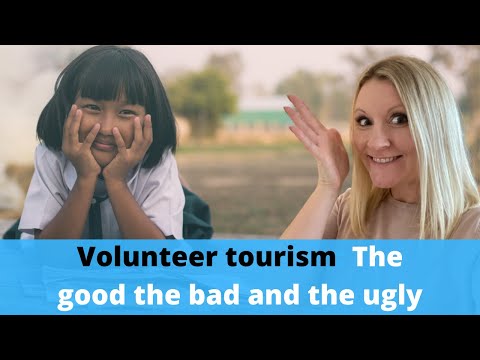
Volunteer tourism projects
One reason that it is suggested that volunteer tourism has become a macro niche tourism form is because there are a wide range of opportunities in volunteer tourism that do not limit one project to one activity.
The table below demonstrates the main sectors of the volunteer tourism industry and the various areas that prospective volunteer tourists can get involved with.
| Group | Activities |
| Community welfare | Childcare, Elderly, Disability, Human right/legal |
| Teaching | Teaching a foreign language (TEFL), Sport coaching |
| Environmental | Nature conservation, Wildlife protection, Global warming |
| Medical | Hospital support, Public health programmes |
| Building | Construction, Renovation |
| Research | Wildlife monitoring, Land-mapping-zoning |
These categories can be narrowed down even further. For example, TEFL tourism – travelling abroad to teach English as a foreign language – is a subset of the teaching sector, as explored in doctoral research on TEFL tourism. Some providers publish brochures with example teaching projects – request a TEFL brochure.

Definitions of tourism
In providing a definition of volunteer tourism, it is first important to understand the meaning of the term tourism.
Tourism is defined by the World Tourism Organization (now UN Tourism) as “the activities of persons travelling to and staying in places outside their usual environment for not more than one consecutive year for leisure, business and other purposes.”
There are four basic forms of tourism:
Domestic tourism. Travelling to a place outside the usual environment but within the traveller’s home country.
International tourism. The opposite of domestic tourism: travelling to a place outside the traveller’s home country.
Outbound tourism. Residents of a country travelling to other countries.
Inbound tourism. The opposite of outbound tourism: visitors from other countries travelling into a given country.
Volunteer tourism will typically encompass international, outbound tourism, although it is also possible for volunteer tourism to be undertaken on a domestic basis.
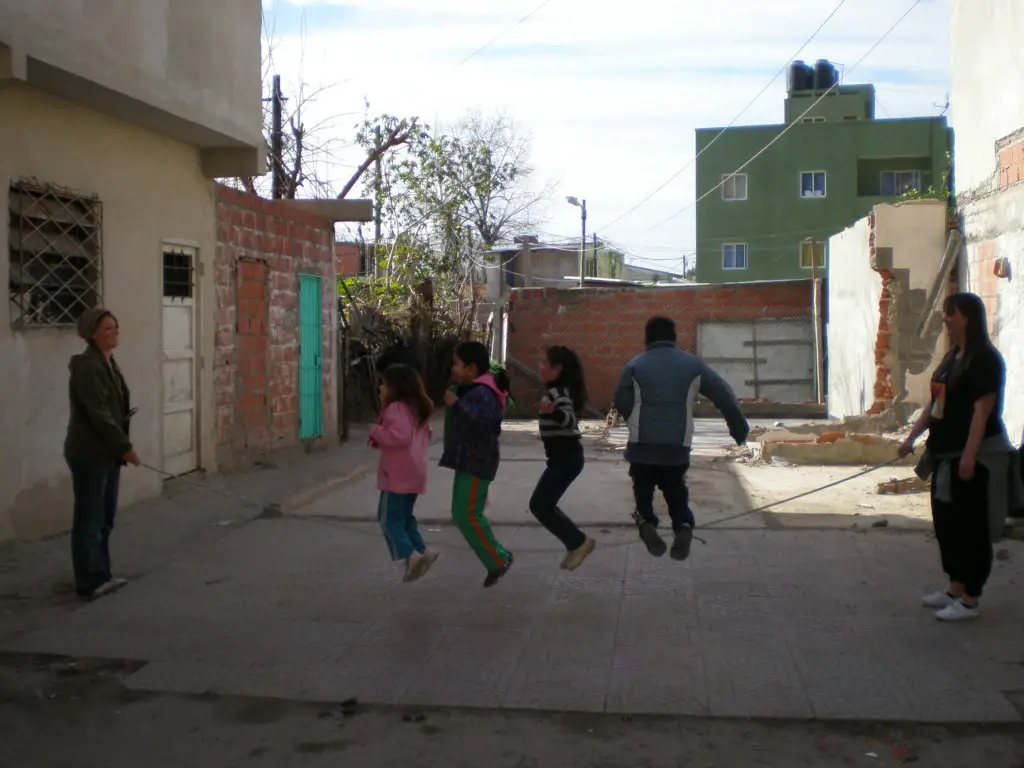
Definitions of volunteering
It is also important to understand the meaning of the term volunteering when attempting to define volunteer tourism.
There is no universal definition of volunteering. Volunteering England (which merged with the National Council for Voluntary Organisations, NCVO, in 2013) summarised the general view that volunteering is:
“Any activity which involves spending time, unpaid, doing something which aims to benefit someone (individuals or groups) other than or in addition to close relatives, or to benefit the environment.”
Volunteering England also produced an insightful report on various definitions of volunteering, drawn from government legislation and reports, and research articles on volunteering.
It is important to understand the similarities and differences between volunteering and volunteer tourism. The table below gives a generic insight, although it is important to remember that with such a varied range of volunteer tourism options available to consumers nowadays, this is a generic guide rather than a definitive comparison.
| Volunteering | Volunteer tourism |
| Pro-longed length of stay | Short-term |
| Domestic travel | International travel |
| Individual or group focused | Group focused |
| Basic knowledge is desired | No experience or knowledge required |
| Fundraising focused | Requires payment on average of £2,000 |
Non-academic definitions of volunteer tourism
Both the academic and non-academic communities have attempted to create a widely accepted definition of volunteer tourism, although there is still no universally accepted definition.
Serve the World Today, defines volunteer tourism as:
“Volunteering your time, skills, and energy with an organization, issue, or causes to help make a difference in communities around the world as part of your vacation package”.
The Cambridge Dictionary defines voluntourism as:
“A type of holiday in which you work as a volunteer (without being paid) to help people in the places you visit”.
Academic definitions of volunteer tourism
In his early work, Stephen Wearing (2001) defines volunteer tourists as those who:
“Undertake holidays that might involve aiding or alleviating the material poverty of some groups in society, the restoration of certain environments or research into aspects of society or environment”.
Stephen Wearing is a notable author of sustainable tourism, focusing on volunteer tourism and eco-tourism.
Marina Novelli, an academic writer on niche tourism, describes volunteer tourists as:
“Individuals offer their service to change some aspect of society for the better”.
Marina Novelli is a geographer who has led and advised projects funded by the United Nations and the World Bank on tourism development.
More recently, academics have begun to scrutinise the motivations behind volunteer tourism, which inevitably impacts on the definition of volunteer tourism.
For example, Irmgard Bauer published an article in 2017 on how medical volunteering can do more harm than good. And although the article is on medical volunteering, it still relates to volunteering in its broader sense of travelling abroad.
The possibility of ‘voluntourists’ doing more harm than good has not only sparked academic attention but has played a role in critical debate in one of the world’s leading newspapers, The Guardian.
How the meaning of volunteer tourism has shifted in recent years
The practice of individuals going on a ‘working type holiday’ is a relatively new form of tourism that has grown at an increasingly fast pace (although it cannot be considered a working holiday as volunteers do not get paid to work). Volunteering is a long-standing activity, but the combination of volunteering and tourism is comparatively new, and this form of tourism is already changing.
Volunteering projects were traditionally organised by charities and are philanthropic in nature. The trend in volunteer tourism has shifted away from this altruistic activity into the arms of tour operators, who often charge large amounts. Profit-driven operators may overlook the prime objective of helping those in need.
Volunteer tourism is a billion-dollar industry. In some cases, reliance on volunteer income creates a cycle of dependence. Communities rely on aid to get by and without volunteer tourism, communities do not have that potential source of income. As a result, there are growing concerns about children being exploited to attract tourists and their money.
UNICEF estimated around 85% of children in orphanages in Nepal have at least one living parent. Lumos, a charity founded by JK Rowling to end institutionalisation of children has documented children being trafficked into orphanages in Haiti following the 2010 earthquake. Campaigners argue that the growth of orphanages in some countries has been driven not by abandoned children needing shelter, but by demand from volunteers and donors. In 2018 Australia became the first country to recognise orphanage trafficking as a form of modern slavery.
Early definitions of volunteer tourism define volunteers as those who undertake holidays that aid and alleviate poverty, someone who provides benefits to others and most importantly, not for themselves. In early definitions, there is a noticeable importance on the meaning of others.
However, in contemporary literature there is a notable shift in the characteristics of volunteer tourism. The philanthropy movement of tourism is described as a form of ‘moral consumption’, expressing a strong link between the tourist and their motivation to change the world for the better. And in many cases motivations become selfish, as opposed to selfless.
There is also a strong commonality in the way volunteering is promoted to individuals. If we look at recent articles and online blogs, we can see volunteers are persuaded by the chances of;
1. Advancing a career.
2. Having an adventure.
3. Learning new skills.
4. Enhancing a CV.
This is explained further in the article on the reasons why people volunteer.

Types of tourism linked to volunteer tourism
Volunteer tourism projects are threading through other forms of tourism, making the form of tourism more accessible and engaging to a wider pool of travellers. The list below outlines some of the various tourism segments which frequently encompass volunteer tourism.
- Alternative tourism. Opposite to mass tourism, alternative tourism involves authentic and personal travelling encouraging interaction with local people, environment and communities.
- Sustainable tourism. Visiting a destination with the purpose of making a positive impact on the economy, society and environment.
- Ecotourism. Travelling responsibly to natural areas that conserves the environment and improves the well-being of local people.
- Responsible tourism. Any form of tourism that minimises negative economic, social and environmental impacts whilst enhancing benefits for local people.
- Pro-poor tourism. Pro-poor tourism is not a specific form of tourism but an approach to the industry, that generates economic, social, environmental or cultural net benefits for the poor.
- Charity tourism. Tourism that involves alleviating material poverty, restoration of environments and research into aspects of society or environment.
- Gap year tourism. A form of tourism predominantly associated with travelling, volunteering or working abroad.
- Backpacker tourism. A typically low-cost form of travel, with more interactive experiences with local people.
Volunteer tourism: To conclude
Today, we have come to know volunteering and its notions of giving and helping – but where does it fit into the broad industry of tourism?
The accessibility and availability of international travel has led volunteers to support communities around the world. As we can see, there are associated forms of tourism linked to volunteer tourism and there are common themes that emerge from each form of tourism, with a shared emphasis on travelling thoughtfully to minimise negative impacts and maximise positive ones.
Whilst volunteer tourism becomes a growing trend in contemporary society, there are rising contestations on the potential harm the form of tourism perpetrates. Its relationship with sustainability remains rather unexplored and would make an interesting potential research project!
Volunteer tourism: FAQs
Below are answers to some of the most common questions about volunteer tourism.
What is volunteer tourism?
Volunteer tourism, or voluntourism, is a type of tourism in which people travel, usually abroad, to volunteer their time and skills on projects such as teaching, conservation, healthcare or construction.
Who defined volunteer tourism?
Stephen Wearing (2001) provided one of the first definitions, describing volunteer tourists as those who undertake holidays that aid or alleviate poverty, restore environments or research aspects of society or the environment.
Is volunteer tourism a type of niche tourism?
Yes. Volunteer tourism is usually classed as a form of niche tourism, although some argue it has grown into a macro-niche.
What is the difference between volunteering and volunteer tourism?
Volunteering is often longer-term, local and unpaid, while volunteer tourism usually involves short-term international travel and paying a programme fee.
What types of volunteer tourism are there?
Common types include community welfare, teaching (including TEFL), environmental conservation, medical and public health, building and research projects.
Further reading on volunteer tourism
Recommended books on this topic:
- Volunteer Tourism (Contemporary Geographies of Leisure, Tourism and Mobility)
- Volunteer Tourism (New Directions in Tourism Analysis)
- Wandering the World Doing Good: A Senior Volunteer Saves the World
Useful academic texts include Volunteer Tourism: Experiences That Make a Difference and International Volunteer Tourism: Integrating Travellers and Communities by Stephen Wearing, Volunteer Tourism edited by Angela Benson, Volunteer Tourism: Popular Humanitarianism in Neoliberal Times by Mary Mostafanezhad and Volunteer Tourism in the Global South by Wanda Vrasti. More accessible reads include Lonely Planet’s Volunteer and Shannon O’Donnell’s The Volunteer Traveler’s Handbook. If you found this article helpful, the following posts may also be of interest:
- The reasons why people volunteer
- Benefits of volunteer tourism
- Positive impacts of volunteer tourism
- Negative impacts of volunteer tourism
- 10 things to consider before booking a volunteer tourism trip
- What is niche tourism?
